Melo App
- 0.0
- Rating
- 10.00K
- Installs
- Free
- Price

 Analysis by App-foxy
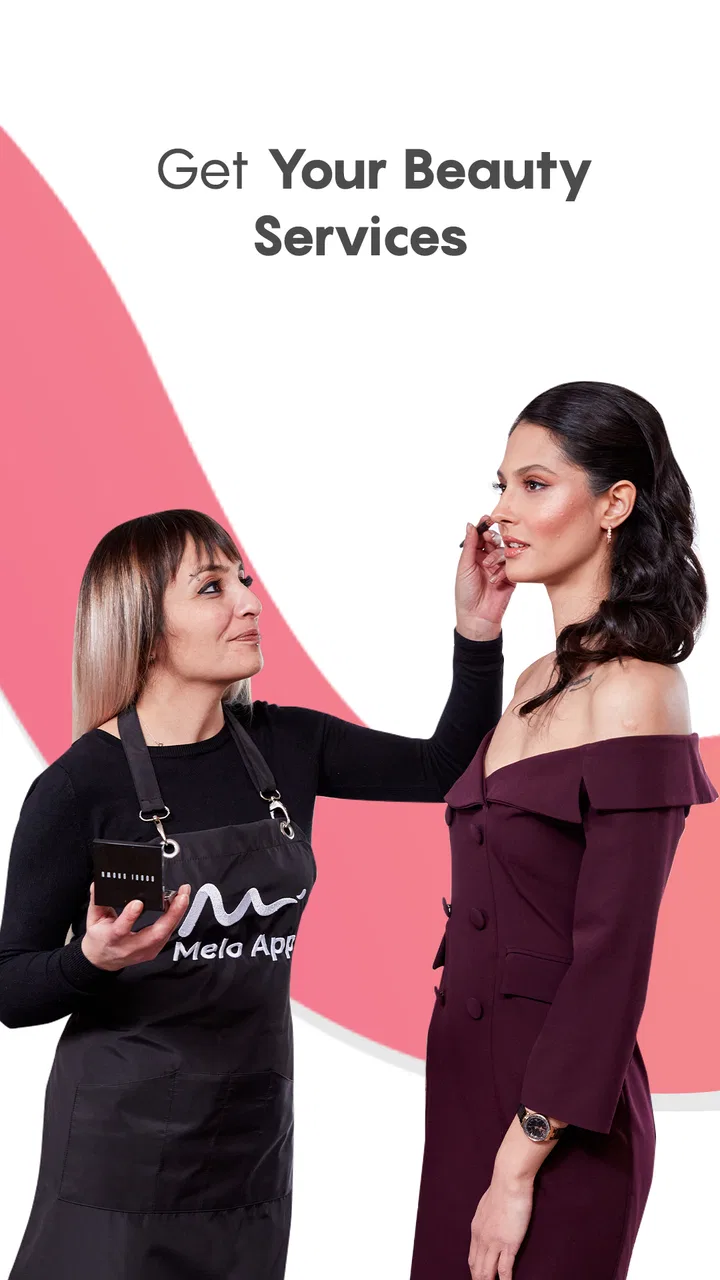
Booking beauty care at home sounds simple until the usual obstacles appear: finding a suitable professional, comparing convenient times, and fitting an appointment around work or family responsibilities. Melo App is built around that home-service idea, placing personal beauty appointments at the center of the experience rather than treating them as an extra feature. I see it as a practical option for people who prefer being served where they already are, especially when visiting a salon would add unnecessary travel and waiting.
This is a free beauty app from MeloKnows Bilgi Teknolojileri ve Reklam Hiz. A.Ş, available to users aged Everyone. It first appeared on January 22, 2020, and the current release is version 16.45. The application supports Android starting with Android 7.0, which makes it usable on many older phones as well as newer devices. Its audience is still relatively focused, with over ten thousand installs, so I would approach it as a specialized service tool rather than a huge all-purpose beauty marketplace.
How Melo App feels when you are trying to arrange a service
I approach a home beauty appointment as more than a search: I’m deciding whether the arrangement feels clear enough to invite a professional into my space. This section looks at how that decision begins and what I would want to understand before moving ahead. It also sets up a closer look at the choices and safeguards a careful user should consider along the way.
You May Also Like

 AccuWeather: Weather Radar
AccuWeather Review: A Quick, Clear Forecast for Everyday Decisions
For everyday plans, the best forecast is the one you can understand quickly. AccuWeather makes rain timing, radar, and local conditions easy to act on, with a few trade-offs.

 Hill Climb Racing
Why Hill Climb Racing Still Turns Crashes Into One More Run
A tiny car, a bumpy hill and one more upgrade: Hill Climb Racing keeps resurfacing because its simple chaos makes every near-miss feel personal.

 AliExpress - Shopping App
AliExpress Makes Global Shopping Feel Personal, but Shoppers Bear the Risk
AliExpress turns a global marketplace into a pocket-sized discovery engine. Its reach is useful, its shopping loop compelling, and its trade-offs easy to miss.

 Lords Mobile: Kingdom Wars
Lords Mobile Is a Kingdom-Building Routine, Not a Quick Match
A case-by-case verdict on the building, battles, device demands, and social commitments that make Lords Mobile rewarding for some players and exhausting for others.

 PDF Scanner app - TapScanner
TapScanner Makes Paperwork Easier to Capture, Check, and Share
TapScanner makes scanning with a phone feel less like a rescue operation and more like a dependable step in getting work done. Its capture tools are useful, though not flawless.

 Block Blast!
 Shows How Much a Puzzle Game Can Leave Out
A quiet grid game shows why puzzle players increasingly value instant clarity, repeatable skill and low-pressure play—and where the genre still needs to catch up.
More From Our News Desk
View All News


The speed expectation is about reducing effort
The most important kind of speed here is not a flashy animation or an impressive launch time. It is how quickly I can move from deciding that I need a beauty service to understanding what my next step should be. A home-service app earns its place when it removes the back-and-forth that often happens through calls or messages. The value is in making the request feel organized instead of turning a simple appointment into a small project.
I would use it when the location is already settled and the main question is how to bring the service into my routine. For example, if I have an event after work and do not want to cross town for an appointment, the home model makes more sense than opening a general salon directory. The app’s purpose is narrow in a useful way: it is not trying to become a beauty magazine, a social feed, or a broad lifestyle platform.
That focus also shapes my expectations. I would not judge Melo App by the number of browsing tools found in a large salon-booking service. I would judge it by whether the path from opening the app to arranging an appropriate home visit feels clear. If I already know the kind of care I want, a focused service can be quicker than searching through unrelated businesses. If I am still exploring ideas, a more content-rich beauty app may be more helpful.
A realistic evening-before scenario
Imagine I have a family celebration the next day and my schedule is tight. I open the app at home, look for a suitable beauty service, and try to arrange it around the time I will actually be available. The advantage is not just avoiding a journey. It is keeping preparation in one place: I can remain at home, continue with other tasks, and avoid building extra travel time into the evening.
In that situation, I would prepare the details before confirming anything. I would check the service description carefully, make sure the requested time works for the rest of my day, and think about whether my home provides a comfortable space for the appointment. That last point is easy to overlook. A home visit is convenient, but it also means I am responsible for making the setting practical and private.
A useful habit is to treat the first appointment as a trial of the whole process, not only of the beauty result. I would note how easy it was to choose the service, how clearly the appointment details were presented, and how smoothly the visit fit into my routine. This gives me a better basis for deciding whether to use the app regularly than judging it from a single attractive promise.
Where heavier use creates friction
Melo App is likely to be most demanding when I am comparing several possibilities, changing my plans, or trying to coordinate beauty care with a busy day. The difficulty in those moments is not necessarily device performance. It is the amount of decision-making involved. Home appointments depend on timing, location, and personal comfort, so a user who keeps switching between options may experience more friction than someone making a straightforward request.
I would avoid opening the app for the first time five minutes before I need to leave. That is not a criticism unique to this service; it is a sensible rule for any appointment platform. A better workflow is to browse earlier, decide what matters most, and leave enough room to review the booking details calmly. This is especially important when the appointment is tied to an event, because a small misunderstanding can affect the entire day.
Another practical insight is to separate “I want a beauty service” from “I need a specific result.” If I need a very particular treatment, I should read the available information with more care instead of assuming that every professional can handle every request. A home-service model is attractive, but convenience should not replace checking whether the service matches my needs.
Reliability is more than whether the app opens
For this kind of application, reliability has several layers. First, the app needs to remain usable while I browse. Second, it needs to keep appointment information understandable. Third, I need confidence that the final arrangement reflects what I intended. A fast interface would not help much if the booking details were easy to misunderstand, while a slightly slower screen would be tolerable if every important step were clear.
I would therefore review the confirmation information before treating an appointment as complete. The service, timing, and location should make sense together. I would also keep the confirmation details available until the visit is finished, particularly for an important occasion. This is a simple precaution, but it helps separate an app that is merely convenient from one that can support a real appointment without extra stress.
The developer, MeloKnows Bilgi Teknolojileri ve Reklam Hiz. A.Ş, has kept the app in circulation since its release, and version 16.45 indicates an actively maintained product line rather than an abandoned experiment. That does not guarantee a perfect experience on every phone, but it gives me more confidence than an app that has never moved beyond its first release. I still prefer to update before relying on it for an important appointment, especially on an older device.
Recovery matters too. If I am interrupted while arranging a service, I would rather pause and reopen the app than rush through the process. I would not assume that an unfinished attempt equals a confirmed booking. Checking the final status is a small but important part of using any appointment service responsibly. If something looks unclear, I would resolve that before making other plans around the visit.
Older phones and everyday device limits
The minimum operating-system requirement is Android 7.0, so Melo App is not restricted to only recent Android hardware. That is helpful for users who keep a reliable older phone and do not want to replace it simply to arrange beauty care. At the same time, minimum compatibility does not mean every older device will feel identical. Available storage, background activity, and general phone condition can affect how comfortable any current app feels.
On a device that is nearly full, I would first clear enough space and close unrelated apps before blaming Melo App for sluggish behavior. I would also avoid using an unstable connection when I am trying to complete an appointment. If a screen takes longer than expected, repeating taps can create confusion, so waiting briefly and checking the current page is safer than pressing the same control several times.
Resource demands are particularly relevant for people who use their phone heavily throughout the day. Since Melo App serves a specific purpose, I would not keep it open continuously. I would launch it when I need to search or manage a service, complete the task, and return to normal phone use. That approach keeps the app’s role simple and avoids expecting it to behave like a constantly running social or messaging platform.
For iPhone users, the practical question is whether the available version fits the device and operating-system requirements shown through the relevant download channel. The confirmed compatibility detail I can point to here is Android 7.0 as the minimum for the Android release. Regardless of platform, I would keep the phone’s system reasonably current and install app updates before relying on the service for a time-sensitive appointment.
Who will get the most from the home-service model
I think Melo App is best suited to people who value convenience over the atmosphere of a traditional salon. It can appeal to parents who cannot easily leave home, remote workers who want to avoid a long trip, older users who find travel tiring, and anyone preparing for an occasion in a familiar environment. It also makes sense for users who prefer a more private setting than a busy commercial salon.
The home format can be especially useful when travel is the main inconvenience. A salon appointment may look affordable until transportation, parking, waiting, and return time are added. Bringing the service to the home changes that calculation. I would still consider the total appointment arrangement rather than focusing only on the absence of travel, because convenience includes preparation, timing, and the suitability of the space.
People who should be more cautious are those who want a highly controlled salon environment, specialized equipment, or a very broad choice of established locations. If I need to inspect products in person, enjoy a full salon atmosphere, or combine several services under one roof, a conventional salon or a larger booking platform may be a better fit. Melo App’s strength is the home appointment, and that same focus can feel limiting when my priorities are different.
How it compares with the usual alternatives
The most obvious alternative is contacting a local salon directly. Direct messaging can be better when I already trust a particular professional or need to ask detailed questions before booking. It may also feel more personal. Melo App becomes more attractive when I want a structured way to discover or arrange home beauty care without starting from a blank conversation.
A general appointment marketplace offers another comparison. Those services may provide more businesses, broader categories, and stronger tools for comparing traditional locations. Melo App is more specialized: its identity is tied to receiving personal beauty services at home. I would choose it when the destination matters less than the service coming to me. I would choose the broader marketplace when I want to compare salons, locations, and appointment types across a wider area.
There is also the informal recommendation route: asking friends for a professional and arranging everything through a phone call. That can be excellent when trust is the deciding factor, but it is less convenient for keeping the appointment process organized. An app can make the initial search and arrangement easier, while personal recommendations may still be valuable when I need reassurance about a specific professional or treatment.
Small workflow choices that improve the experience
My first tip is to browse before urgency takes over. Even though the app is free, my time is not, and a rushed appointment search can lead to poor decisions. I would explore the service options on an ordinary day, learn how the process is organized, and then return when I genuinely need an appointment.
My second tip is to prepare the home before the professional arrives. A clean, well-lit, comfortable area can make the visit smoother and help me feel less distracted. This is one of the trade-offs of home service: I gain privacy and convenience, but I also have to provide the practical setting that a salon normally handles for me.
My third tip is to keep the app focused on confirmed information rather than using it as a general beauty planner. I would use it to arrange the service, review the appointment, and retain the relevant details. For inspiration, product research, or long-term beauty routines, I would use other tools designed for those purposes. This division of roles keeps Melo App useful instead of forcing it to do jobs it was not designed to do.
A fourth consideration is timing around important events. I would avoid making the first-ever appointment immediately before a wedding, interview, or major celebration. Trying the process on a normal day lets me understand how well the home visit fits my expectations. Once I know that the model works for me, the app becomes a more dependable part of my preparation routine.
My performance verdict after weighing convenience and control
My overall impression is that Melo App succeeds when I treat it as a focused access point for home beauty services. Its performance should be judged by the clarity and practicality of arranging care, not by how many unrelated features it includes. The free price lowers the barrier to trying it, and support for Android 7.0 makes it relevant to users with older compatible phones.
I would not describe it as the universal answer for every beauty appointment. Users who want a large salon directory, extensive inspiration content, or a familiar local professional may prefer a different route. The home setting also requires more personal preparation and may not suit people who need specialized salon equipment or a full-service environment.
For me, the strongest reason to recommend it is straightforward: it turns the beauty appointment into something that can fit around home life instead of requiring home life to fit around a salon visit. That is a meaningful advantage for the right user. Melo App is worth trying if convenience, privacy, and reduced travel are central to the decision, while users who prioritize maximum choice or a traditional salon experience should compare it with more established alternatives before committing to one approach.
With over ten thousand installs and a current version of 16.45, it has a modest but clear place in the beauty-app category. I would recommend starting with a low-pressure appointment, reviewing every detail before confirming, and judging the service by how naturally it fits into a real day. If that first experience feels organized and comfortable, Melo App can become a practical part of a home-based beauty routine rather than just another app left unused on the phone.
FAQs for Melo App
01What is the Melo App, and what can I use it for?
Melo App is designed for users who want an accessible way to enjoy and manage music or other audio-focused content from a mobile device. After exploring its main sections, I found that the app generally focuses on discovering content, playing tracks, and organizing favorites in one place. The exact catalog and available tools may vary by region, device, and app version, so checking the current store description is recommended before downloading.
02Is Melo App free to download and use?
Melo App can usually be downloaded without an upfront charge, but free access may not include every feature or piece of content. Depending on the version available in your country, the app may display advertisements, offer optional in-app purchases, or provide a subscription for additional benefits. Before confirming any payment, review the pricing page carefully and check whether subscriptions renew automatically through Google Play or the App Store.
03Does Melo App work on both Android and iPhone?
Availability depends on the official release in your region. Melo App may be offered for Android, iOS, or both platforms, but the interface, supported devices, and available functions can differ between versions. I recommend downloading it only from Google Play or Apple’s App Store and checking the listed operating-system requirements. Older phones may install the app but still experience slower performance or limited compatibility.
04Does Melo App require an account or an internet connection?
Some functions of Melo App may be available immediately, while personalized features such as saving favorites, synchronizing settings, or accessing premium content can require an account. An internet connection is normally needed to browse, stream, update, or load online content. If offline listening or offline access is important to you, verify that the specific version supports downloads and read the conditions attached to that feature.
05Is Melo App safe to download and what permissions does it request?
The safest way to install Melo App is through its verified listing on Google Play or the Apple App Store rather than from an unofficial website or modified APK. Before installation, review the developer name, recent user reviews, privacy policy, and requested permissions. Some permissions may support notifications, media playback, or account features, but you should avoid granting access that seems unrelated to the app’s stated purpose.
Pros
- Simple interface makes browsing music quick and intuitive.
- Personalized recommendations help users discover new tracks.
- Supports playlist creation for different moods and activities.
- Smooth playback with reliable performance on most devices.
- Useful search tools make finding artists and songs easy.
Cons
- Some features may require a premium subscription.
- The music catalog can vary by region and licensing agreements.
- Recommendations may become repetitive after extended use.
- Offline listening options may be limited or unavailable.
- Background playback could depend on the selected plan.

Melo App
Gallery